
DK Capital Group
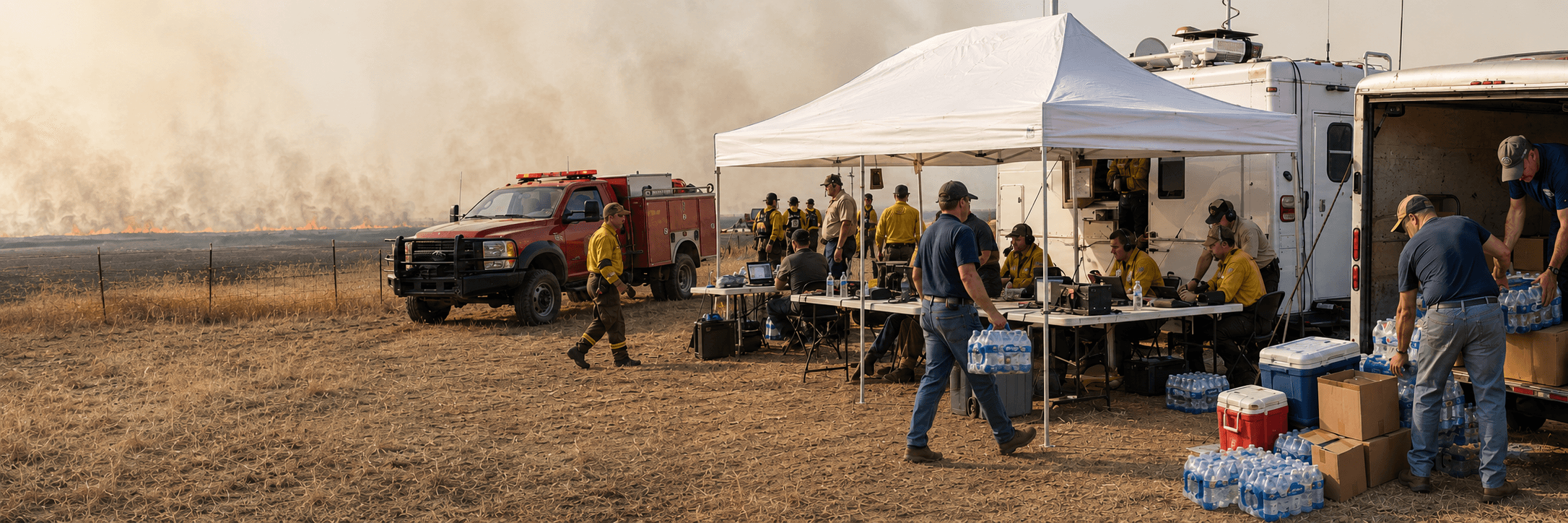
Emergency personnel working at a grass-fire command station while community volunteers unload food, water, and supplies

Public Safety & Emergency Support

Emergency Food,
Water & Incident
Support

When a local emergency agency asks for help, the church can quickly bring together food, water, and practical support for responders and people affected by the incident.

Practical Support for the First 24 Hours

Start with what is needed most, then add support as the situation develops.

Food & Water

Water and packaged food can leave right away. While those supplies are on the way, nearby vendors can prepare sandwiches, meal boxes, or other food for the incident.

  • Bottled water and electrolyte drinks
  • Packaged snacks and food that can be handed out immediately
  • Sandwiches, meal boxes, and other food prepared by local vendors

Practical Site Support

If the incident lasts longer or the location is remote, the church can arrange a few basic services to make the support area more workable.

  • Ice, cups, napkins, trash bags, and basic sanitation supplies
  • Portable toilets when the location or expected duration makes them useful
  • Tables, secured canopies, lighting, charging, and communications support

Partner Church Support

A nearby partner church may be able to arrive sooner or bring people, vehicles, and supplies the lead church does not have available.

  • Volunteers and vehicles for pickup and delivery
  • Food, water, equipment, and local vendor contacts
  • Other practical help requested for that incident

How Support Is Coordinated

Support begins when the agency asks for help

The agency tells the church what is needed, where to deliver it, and who needs to be served. The church gathers the supplies, calls local vendors and partner churches, and sends volunteers to the approved location.

Church volunteers stay outside restricted areas and do not perform firefighting, law enforcement, search and rescue, or emergency medical duties.

Aid Requested

A local emergency agency calls the church and explains what is needed.

Location Confirmed

The agency tells the church where to deliver the aid, who it is for, and any access or safety limits.

Aid Mobilized

The church loads the supplies it has ready and calls the vendors, partner churches, and volunteers needed for the response.

Support Continues as Needed

The church stays in touch with the agency, brings more supplies when needed, and stops when the agency no longer needs assistance.

Growing as Needs Develop

Start with food and water. Add more as needs become clear.

After each response, the church can look at what worked, what was missing, and whether more equipment, vendor arrangements, or volunteer training would help next time.